Welcome to Slow Mow Season: A Better Way to Help Pollinators
No Mow May has a nice ring to it. It’s simple, memorable, and gives the mower a little vacation right when spring starts glowing.
But as pollinator advice goes, it’s incomplete.
The idea behind No Mow May is solid: let spring lawn flowers bloom so bees and other pollinators have more food. The problem is that pollinators don’t just need help in May. They need nectar, pollen, nesting sites, shelter, and pesticide-free spaces across the whole growing season.
For me, Slow Mow Season is a better fit.
It keeps the useful part—mowing less—without pretending one month of shaggy grass can carry an entire ecosystem.
No Mow May Opened the Door
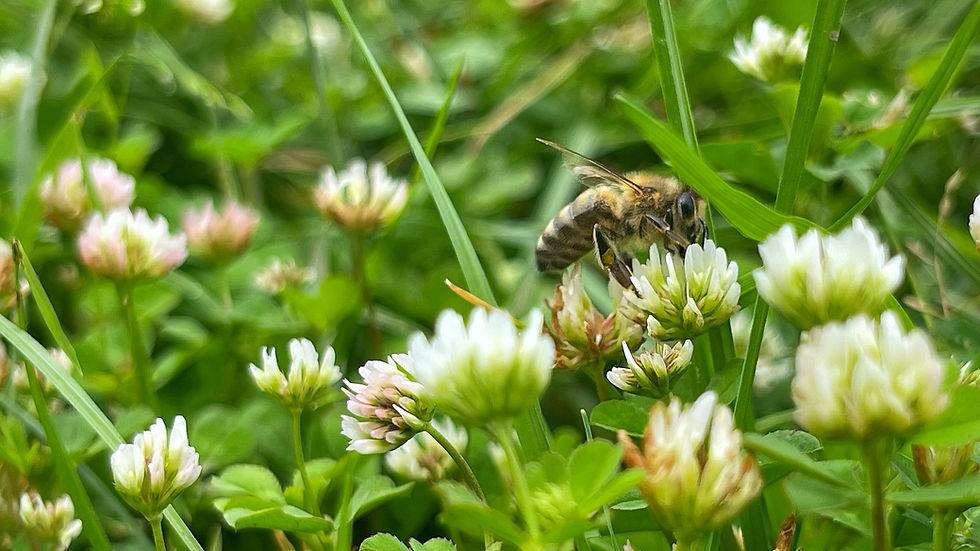
No Mow May became popular because it gave people a very doable way to think differently about lawns. Instead of treating every dandelion, violet, and clover patch like a weed to be pulled, it asked: what if some of this is food?
A lawn with blooming “weeds” can support bees, flies, butterflies, beetles, and other insects, especially in places where traditional turfgrass dominates the landscape. Mowing less often allows low-growing flowers to bloom, and those flowers can become quick forage for pollinators.
So no, No Mow May is not useless. It can be a helpful first step.
But it is a first step.
If the mower roars back on June 1 and the yard goes right back to weekly cuts, herbicides, and bare mulch, the benefit is short-lived. Pollinators need more than a temporary buffet.
Why Slow Mow Season Makes More Sense
The biggest issue with No Mow May is right there in the name: May.
In some regions, May is a great time to pause or reduce mowing. In warmer climates, many bees and spring flowers are active earlier. In cooler places, peak bloom may come later. A fixed month makes the idea easy to promote, but nature does what it wants, on her own timeline.
Slow Mow Season is more flexible.
Instead of skipping mowing for one specific month, the goal is to mow less often and more intentionally throughout the growing season. That could mean mowing every two or three weeks instead of weekly. It could mean raising the mower blade. It could mean keeping paths and play areas short while letting less-used sections grow and bloom.
The point is not to abandon your yard. The point is to stop treating frequent mowing as the default.
What Slow Mow Season Actually Looks Like
Slow Mow Season can be simple.
Mow less often
Research and conservation guidance increasingly point toward reduced mowing as a practical way to support more flowering lawn plants and the insects that use them. Mowing every two or three weeks can allow flowers to bloom while still keeping the yard manageable.
Weekly mowing, especially at a low height, keeps many lawn flowers from ever becoming useful forage. Stretching the schedule gives those plants a chance.
Mow higher
A higher mower setting is one of the easiest changes to make. Taller grass shades the soil, helps retain moisture, and gives low-growing flowers more room to bloom. (And saves on your water bill.)
It also tends to look more intentional than an all-or-nothing mowing pause.
Keep the edges tidy
This one is part ecology, part neighbor relations.
A mowed border around a taller patch signals that the area is intentional. Same with a path through a mini-meadow or a clean edge along the sidewalk. It’s a small design move, but it helps if you have a stickler neighbor.
Wildlife habitat often gets more support when it looks cared for.
Watch what grows
Not every plant that appears in an unmowed lawn is helpful. Some may be invasive. Some may spread aggressively. Some may not offer much to pollinators at all.
Slow mowing works best when paired with observation. What’s blooming? What are insects visiting? Are invasive plants moving in? Is the area adding habitat value, or just getting tall?
A little attention goes a long way.
It’s Not Just About the Grass: Plant More Native Plants
Mowing less is useful, but it has limits.
A turfgrass lawn with very few flowers will not suddenly become prime pollinator habitat because the mower took a break. For real impact, Slow Mow Season should be paired with more native plants.
Native flowers, shrubs, and trees support pollinators across the season and often provide better nutrition than random lawn blooms alone. They also support caterpillars, birds, and other wildlife in ways turfgrass simply cannot.
Think of slow mowing as reducing harm and opening space. Native planting is how you build the good stuff.
Good places to start include:
Replace a strip of lawn
You don’t have to convert the whole yard. Start with a sunny edge, a mailbox bed, a slope that’s annoying to mow, or the corner where grass never looked good anyway.
Choose blooms for every season
Pollinators need food from early spring through fall. Aim for a mix of early, mid-season, and late-blooming native plants.
Early bloomers help emerging bees. Summer flowers feed a wide range of insects. Fall bloomers, like asters and goldenrods in many regions, are especially important for late-season fuel.
Add shrubs and trees
Flowers get most of the attention, but native shrubs and trees can be powerhouse habitat. Willows, serviceberries, oaks, dogwoods, blueberries, and other regionally appropriate natives can support pollinators and other wildlife.
Avoid pesticides
This is a big one—and one that a lot of people don’t want to hear. A flowering lawn or garden treated with insecticides can become a hazard instead of a habitat.
If the goal is to help pollinators, skip pesticides and be cautious with any lawn or garden product that could harm bees, butterflies, moths, beetles, and other beneficial insects. And yes, read the fine print on bagged soil, compost, mulch, and lawn products. Some come with added fertilizers, weed preventers, insecticides, or fungicides built in. Convenient? Sure. Pollinator-friendly? Not always.
Field Tip: Use Pollinator Partnership’s Bee Friendly Gardening Guide
For a practical starting point, Pollinator Partnership has a Bee Friendly Gardening section that helps people create pollinator habitat in yards, gardens, balconies, and other outdoor spaces.
Find it here:
It’s a helpful resource because it moves the conversation beyond “mow or don’t mow” and into how you can create a better habitat: more flowers, better plant choices, and more thoughtful outdoor spaces.
What About Ticks, Snakes, and HOAs, You Ask?
Slow Mow Season works best when it fits the place you actually live.
If ticks or venomous snakes are part of your local climate, Slow Mow Season does not mean turning the whole yard into a wildlife surprise party. Taller lawn grass does not automatically mean more ticks; recent research from the Vermont Center for Ecostudies found no relationship between tick density and mowed grass height in the lawns they studied. Still, be smart about the spaces people and pets actually use. Keep paths, play areas, pet zones, and gathering spots easy to see and walk through. Manage brushy edges, wood piles, rock piles, and dense vegetation where ticks or snakes may be more likely to hang out. Do tick checks after time outside, and don’t let pets nose around in tall areas where visibility is poor. Pollinator-friendly should still be people- and pet-friendly.
If you have an HOA or local weed ordinance, start small and tidy. Use mowed borders. Add signs if allowed. Choose intentional native beds instead of letting the entire front yard go long overnight.
A slow-mowed yard does not have to look neglected. In fact, the best ones usually don’t.
Better Than a One-Month Challenge
The trouble with month-long environmental challenges is that they can make conservation feel like checking a box.
Didn’t mow in May? Great. Done.
But pollinator decline is not a one-month problem, and lawns are not a one-month opportunity.
Slow Mow Season asks for a different rhythm: fewer unnecessary cuts, more flowers, less chemical use, more native plants, and a yard that changes with the season.
That’s not as tidy as a slogan, but frankly, it’s more useful.
The Bottom Line
No Mow May helped start a good conversation. Slow Mow Season is the evolution.
The goal isn’t to have the wildest lawn on the block. The goal is to make outdoor space a little more alive—and to give pollinators something they can use long after the calendar flips to June.
This story is part of The 89 Percent Project, an initiative of the global journalism collaboration Covering Climate Now.
References
Xerces Society, “No Mow May: An Easy Start for a Nature-Friendly Yard (But Not the Finish Line)”
Vermont Center for Ecostudies, “Does No Mow May Invite Invasives and Ticks to Your Yard?”
Pollinator Partnership, “Bee Friendly Gardening”